

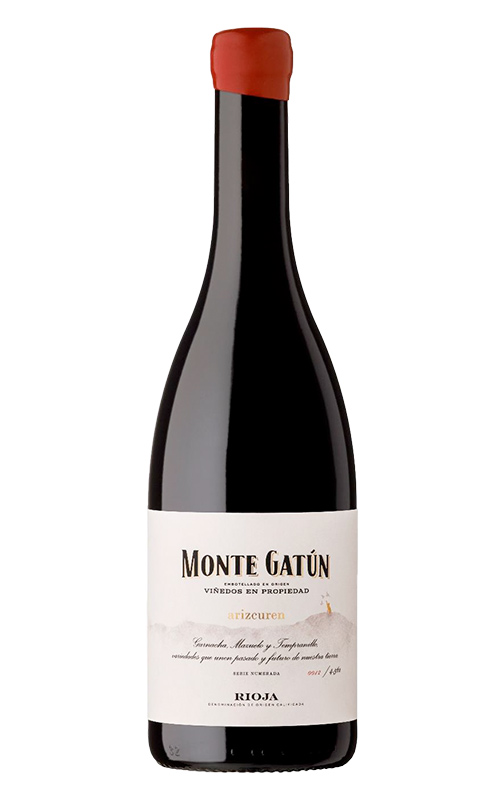
Arizcuren Monte Gatún 2023
Descripción
Monte Gatún es un vino que representa el pasado, presente y futuro de la Rioja Oriental. Pasado por sus variedades tradicionales: Garnacha y Mazuelo; presente por la utilización mayoritaria de la Tempranillo (la uva más cultivada en la región); y un futuro construido en torno a la unión de todas ellas siguiendo la tradición riojana de mezclar variedades para hacer grandes vinos. Tinto muy agradable con un paso suave y fácil de beber.
Ficha técnica
Cata
Viñedo y elaboración
Opinión de los críticos
The village red 2023 Monte Gatún was produced with 48% Tempranillo, 25% Garnacha, 20% Mazuelo and, for the first time this year, 5% Graciano and 2% Maturana, varieties he's adding to provide freshness and to find a way to manage the thousands of hectares of Tempranillo planted in Rioja Baja, which, if planted at high altitude, controlling vigor and yields and especially harvesting at the right date, can still produce a fresh and straightforward wine that can be the backbone of a blend with local varieties that still deliver a more complex wine and with a sense of place. The Tempranillo is around 30 years old and the rest are younger vines, at 550 to 600 meters in elevation on the north face of the Monte Yerga on sandy soils with limestone. The destemmed grapes are fermented with indigenous yeasts through a pied de cuve by variety, blended before malolactic and then aged 70% in concrete vats and 30% in used French and Slavonian oak barrels for 12 months. He managed to keep this at 13% alcohol, with a pH of 3.59 and 4.89 grams of acidity, and the profile is as he explained: fine-boned and complex, showing the face of the southern Rioja in a balanced and subtle way. 15,856 bottles produced. It was bottled in November 2024.
A fruity, expressive nose of ripe cherries, baked plums, grapefruit and hibiscus. Juicy and vivid, with a medium body and some firm, chalky tannins. Pristine and bright in the finish. Drink now.
Monte Gatún is the entry-point red from this exciting Rioja Oriental bodega, made with
grapes from various parcels in Quel. Marrying Tempranillo, 25% Garnacha and 20%
Mazuelo, it's a very lightly wooded blend that has a 60% concrete component. Spicy and
perfumed, with notes of garrigue and tapenade, dark berry fruit and a firm finish. 2026-32

Arizcuren es una pequeña bodega riojana al frente de la cual se encuentra Javier Arizcuren, miembro de una saga de viticultores de la localidad de Quel, en subzona de la Rioja Oriental.


Añadas: 2023 2021 2020 2019
Fabuloso. Extremadamente disfrutable, fresco, fino. Toda la complejidad que el carácter primario puede dar.
Vino sorprendente. Agradable sorpresa. Para repetir.