

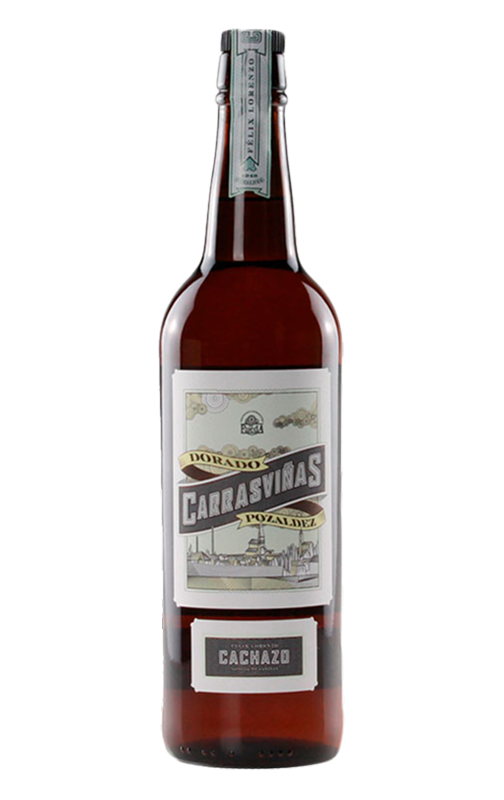
Carrasviñas Dorado
Descripción
Bodegas Félix Lorenzo Cachazo elabora este vino dorado según la tradición de Rueda: exponiendo el vino a la intemperie, a grandes contrastes térmicos, en damajuanas de cristal. El resultado es un vino especial, muy aromático, con recuerdos de crianza oxidativa y un gusto glicérico, largo y envolvente.
Ficha técnica
Cata
Viñedo y elaboración
Dicho mosto es fermentado en depósito de acero inoxidable. Nada más finalizar la fermentación alcohólica se elimina la lía gruesa y se realiza el "coupage" de los dos tipos de vinos.
Opinión de los críticos
Cachazo’s Dorado is made from a blend of Palomino (from one of the old vineyards that remains in the region) and Verdejo, aged for 24 months in demijohns and a further 24 months in used 300L barrels. The wine displays a pale golden colour with citrus peel, chamomile and marzipan aromas. It is welcomingly toasty with an elegant and vibrant palate that leads to a lick of almond on the finish. A wine that keeps getting better year on year. 2026-32. (Beth Willard)
Even though they told me the bottle of the NV Carrasviñas Dorado I tasted was the February 2025 bottling, there is nothing on the front or back label to make it identifiable as such, other than an obscure and difficult-to-read lot code printed over some writing. I just don't understand why they don't print this information clearly readable and make it possible for people to know what wine they are drinking and decide if they want a fresh bottle or one with more time in the bottle. Anyway, I'll keep insisting, because I think it's worth it to see how the creamy and nutty golden wine matures in bottle. It's a blend of 65% Verdejo and 35% Palomino with 15% alcohol; it was picked ripe and never fortified and has a pH of 3.2 and six grams of acidity. It aged in glass demijohn in an oxidative way, and it also had a short biological phase with flor, making it akin to a young-ish Amontillado. The wine is polished by two years in used 300-liter barrels. 2,000 bottles in this lot. (Luis Gutiérrez)
A Rueda Dorado that shows hints of almond to the sour dough, nori and yellow apples. Rich and dry with a sleek mid-palate and lots of yeasty flavors and apples. Drink now.

Bodegas Félix Lorenzo Cachazo es una de las casas con más solera de Rueda. Hoy es la sexta generación quien está al mando de esta bodega familiar.


Estupendo. Parece mentira que se valoren tan poco estos vinos. Este está de cine.
Complejo y potente. Singular y muy recomendable para los amantes de los vinos generosos. Gran trabajo